
Chemical engineering is taught around unit operations. Before students can design a process, they need to run a distillation column, follow a crystalliser through nucleation and growth and reconcile the mass and energy balance they calculated with what the plant actually did. Our technical demonstrators allow the teacher to conduct laboratory sessions that help students understand the phenomena of each operation, from bench-top units for a first-year practical to pilot-scale plants for operator training and research.
Every unit is selected for the experiments and learning outcomes a course has to deliver, and we have a team of in-house engineers to support you locally from on-site installation, training and commissioning through to technical services for the working life of the equipment.
Unit operations covered
We offer a wide range of chemical unit operations units commonly found in demonstration environments in undergraduate chemical, process and environmental engineering programmes, which can be used for both teaching and research.
| Unit Operation | What Students Do |
|---|---|
| Distillation | Measure temperature/composition profiles, vary reflux ratio, compare stages via McCabe-Thiele. |
| Evaporation | Study heat transfer coefficient, steam economy and boiling point elevation. |
| Crystallisation | Control supersaturation, observe nucleation and growth, measure yield and crystal size. |
| Filtration | Study constant pressure/rate filtration, cake resistance and cake washing. |
| Absorption | Measure pressure drop, flooding and mass transfer coefficients. |
| Adsorption | Determine breakthrough curves, bed capacity and mass transfer zone length. |
| Liquid-liquid Extraction | Establish solute distribution between phases, compare stages with graphical design. |
Bench top, stand-alone pilot and operator scale
All of our bench-top and pilot units are built with glass reactors and transparent components, so students can watch the operation as they measure it. What changes with scale is how much they can investigate.
Bench-top and mini-pilot units are demonstration equipment. With few or no control loops and a limited set of measured parameters, students can see how distillation or absorption works and complete mass and energy balance experiments with some simple calculation, but they cannot vary many operating conditions. This suits large early-year cohorts.
Stand-alone pilot units offer a larger capacity, generally up to 1 L, and one or two control loops on parameters such as temperature, flow or pressure. Students can change a variable and measure the difference, which is what later-year unit operations courses and honours projects require.
Pilot-scale operator units are built with industrial-grade valves, instrumentation and control. They are intended for training operators in safe start-up, operation, shutdown and maintenance, and they also serve pilot-scale development work in process engineering and water treatment.
Choosing unit operations equipment for your course
Start with the experiments and learning outcomes in your unit guide, because the equipment has to fit the course rather than the other way around. We will map each candidate unit against those experiments and tell you plainly where the fit is close and where it is not.
Then consider the cohort. How many students work on the unit at once, how long does a run take, and how many groups must cycle through in a semester? The answer often decides between one pilot plant and several demonstrators. Plan around lead time as well, since funding rounds and semester dates rarely wait for a shipment.
Local support through the life of the equipment
We install and commission the equipment on site and train your teaching and technical staff on how to operate it. After handover, support, spare parts and technical advice come from our team in Australia, so a fault mid-semester is dealt with by people who know the unit and the course it serves. The teaching is yours.
Frequently asked questions
Can you modify the equipment to our specification, for example adding a control loop or measuring another parameter?
Yes. We work with the manufacturer’s process engineers to engineer the change into the unit, whether that is an additional control loop, extra instrumentation or a different measured parameter. We complete a factory acceptance test on the modified unit and involve you at every step from specification to sign-off.
We have a custom research project. Can you design a pilot unit for us?
Yes. We start by gathering the process information: the operation, the fluids, the throughput and the data you need to collect. From that we prepare an engineering flowchart and run a feasibility study with the manufacturer’s process engineers covering scale, materials, services and instrumentation. Only once the design is feasible do we present a proposal for your acceptance, and manufacture begins after approval.
What laboratory services do the units need?
Bench-top units generally run on standard laboratory power and water. Pilot units may need steam, cooling water, compressed air, three-phase power or fume extraction, depending on the operation. We confirm the requirements against your laboratory before quoting.
Can the same equipment be used for teaching and research?
Yes. Stand-alone pilot units and operator-scale plants carry enough instrumentation and control to support research projects and pilot-scale development alongside scheduled classes. Bench-top demonstrators are intended for teaching.
Not sure which unit fits your course?
Send your unit guide, we’ll map the fit.
-
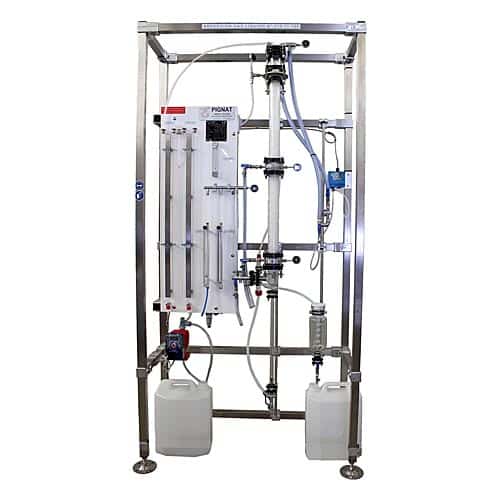
ABS/100 – Gas-Liquid Absorption Column Training Unit
View Product -
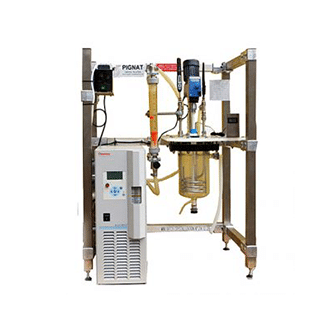
CRA100 – Batch Cooling Crystallization Teaching Unit
View Product -
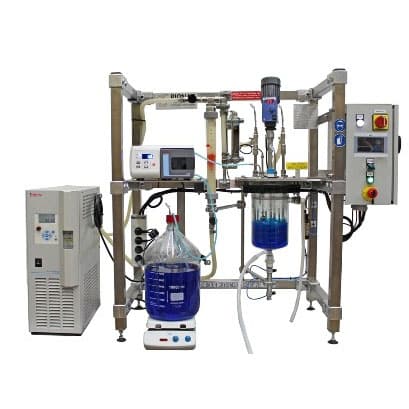
CRA200 – Continuous Crystallization Teaching Unit
View Product -
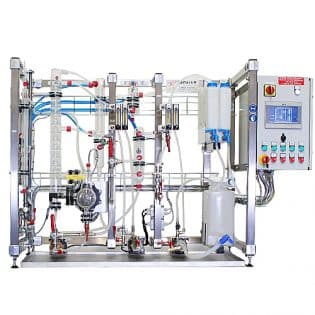
DVI/100 | Mini continuous distillation unit
View Product -
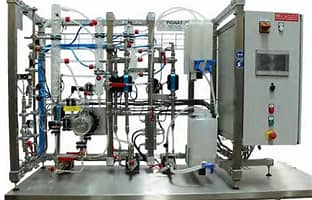
DVI/300 – Automated Continuous Distillation Training Unit
View Product -
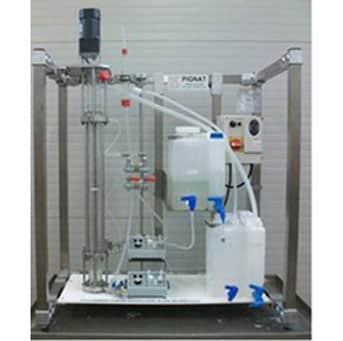
ELA100 – Stirred Liquid-Liquid Extraction Column
View Product -
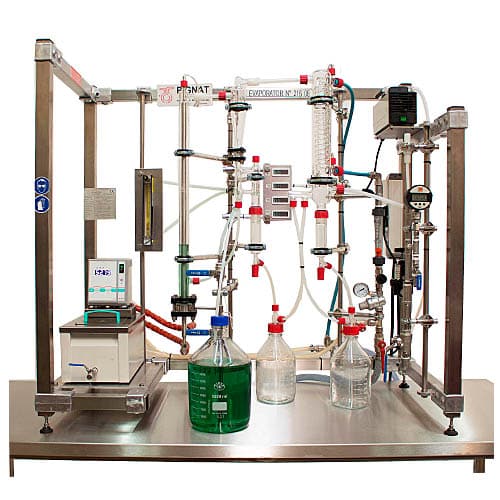
EVV100 – Simple Effect Evaporator Training Unit
View Product
Chemical engineering is taught around unit operations. Before students can design a process, they need to run a distillation column, follow a crystalliser through nucleation and growth and reconcile the mass and energy balance they calculated with what the plant actually did. Our technical demonstrators allow the teacher to conduct laboratory sessions that help students understand the phenomena of each operation, from bench-top units for a first-year practical to pilot-scale plants for operator training and research.
Every unit is selected for the experiments and learning outcomes a course has to deliver, and we have a team of in-house engineers to support you locally from on-site installation, training and commissioning through to technical services for the working life of the equipment.
Unit operations covered
We offer a wide range of chemical unit operations units commonly found in demonstration environments in undergraduate chemical, process and environmental engineering programmes, which can be used for both teaching and research.
| Unit Operation | What Students Do |
|---|---|
| Distillation | Measure temperature/composition profiles, vary reflux ratio, compare stages via McCabe-Thiele. |
| Evaporation | Study heat transfer coefficient, steam economy and boiling point elevation. |
| Crystallisation | Control supersaturation, observe nucleation and growth, measure yield and crystal size. |
| Filtration | Study constant pressure/rate filtration, cake resistance and cake washing. |
| Absorption | Measure pressure drop, flooding and mass transfer coefficients. |
| Adsorption | Determine breakthrough curves, bed capacity and mass transfer zone length. |
| Liquid-liquid Extraction | Establish solute distribution between phases, compare stages with graphical design. |
Bench top, stand-alone pilot and operator scale
All of our bench-top and pilot units are built with glass reactors and transparent components, so students can watch the operation as they measure it. What changes with scale is how much they can investigate.
Bench-top and mini-pilot units are demonstration equipment. With few or no control loops and a limited set of measured parameters, students can see how distillation or absorption works and complete mass and energy balance experiments with some simple calculation, but they cannot vary many operating conditions. This suits large early-year cohorts.
Stand-alone pilot units offer a larger capacity, generally up to 1 L, and one or two control loops on parameters such as temperature, flow or pressure. Students can change a variable and measure the difference, which is what later-year unit operations courses and honours projects require.
Pilot-scale operator units are built with industrial-grade valves, instrumentation and control. They are intended for training operators in safe start-up, operation, shutdown and maintenance, and they also serve pilot-scale development work in process engineering and water treatment.
Choosing unit operations equipment for your course
Start with the experiments and learning outcomes in your unit guide, because the equipment has to fit the course rather than the other way around. We will map each candidate unit against those experiments and tell you plainly where the fit is close and where it is not.
Then consider the cohort. How many students work on the unit at once, how long does a run take, and how many groups must cycle through in a semester? The answer often decides between one pilot plant and several demonstrators. Plan around lead time as well, since funding rounds and semester dates rarely wait for a shipment.
Local support through the life of the equipment
We install and commission the equipment on site and train your teaching and technical staff on how to operate it. After handover, support, spare parts and technical advice come from our team in Australia, so a fault mid-semester is dealt with by people who know the unit and the course it serves. The teaching is yours.
Frequently asked questions
Can you modify the equipment to our specification, for example adding a control loop or measuring another parameter?
Yes. We work with the manufacturer’s process engineers to engineer the change into the unit, whether that is an additional control loop, extra instrumentation or a different measured parameter. We complete a factory acceptance test on the modified unit and involve you at every step from specification to sign-off.
We have a custom research project. Can you design a pilot unit for us?
Yes. We start by gathering the process information: the operation, the fluids, the throughput and the data you need to collect. From that we prepare an engineering flowchart and run a feasibility study with the manufacturer’s process engineers covering scale, materials, services and instrumentation. Only once the design is feasible do we present a proposal for your acceptance, and manufacture begins after approval.
What laboratory services do the units need?
Bench-top units generally run on standard laboratory power and water. Pilot units may need steam, cooling water, compressed air, three-phase power or fume extraction, depending on the operation. We confirm the requirements against your laboratory before quoting.
Can the same equipment be used for teaching and research?
Yes. Stand-alone pilot units and operator-scale plants carry enough instrumentation and control to support research projects and pilot-scale development alongside scheduled classes. Bench-top demonstrators are intended for teaching.
Not sure which unit fits your course?
Send your unit guide, we’ll map the fit.
