
When a test engineer measures strain on a tensile, compression or bending specimen, the extensometer has to stay accurate from the first load step to failure. A clip-on extensometer touches the specimen with knife edges, so it can slip on smooth surfaces, mark soft materials such as polymers and foils, and often has to come off before the specimen breaks. A video extensometer measures the same deformation with a camera and digital image correlation (DIC) software. As nothing touches the specimen, the measurement can run through to break and also give transverse strain, necking and crack length.
Our video extensometers allow the test engineer to measure strain without contact on a universal testing machine, from a single-camera extensometer for routine quality control testing to a two-camera 3D system for research, component testing and high-temperature tests inside a furnace.
Every system is selected for the materials, test standards and testing machine your laboratory works with, and our applications engineers support you locally from selection through to commissioning on site.
Video extensometers
We offer a wide range of video extensometers commonly found in materials testing laboratories in universities, research organisations and manufacturing quality control, which can be used for tensile, compression, bending, shear, torsion and fatigue testing.
Single-camera video extensometers
A single-camera video extensometer views the specimen from one direction and measures axial and transverse strain in the plane of the image. The engineer can set one or several gauge lengths and follow necking as it develops. This type suits routine tensile testing, where the specimen stays square to the camera.
3D video extensometers
A 3D video extensometer uses two cameras that view the specimen from different angles, so it also sees movement towards and away from the cameras. The strain reading stays accurate when a specimen twists, bends out of plane or settles in the grips. It can also measure at several positions at once.
High-temperature video extensometers
A high-temperature video extensometer measures strain on a specimen inside a furnace or environmental chamber while the camera stays outside the heated zone. The engineer can then test at temperature without putting a contact extensometer into the heat.
DIC software and software kits
The DIC software acts as a sensor in the test set-up: it sends strain values to the testing machine or a data acquisition system in real time, so the test software records strain alongside load. Modules for transverse strain, torsion, crack length, full-field strain maps and 3D measurement can be added as the laboratory needs them. If you want to build a video extensometer around your own cameras and lighting, a software kit is also available.
Comparing 2D and 3D video extensometers
Both types use the same DIC software and the same real-time connection to the testing machine. The number of cameras decides how each handles movement out of the image plane.
A 2D system uses one camera and assumes the specimen surface stays at the same distance from the lens. If the specimen moves towards the camera, for example when a thin sheet buckles in compression, the image scale changes and the system reads that change as strain. For flat or round specimens in a standard tensile test, a 2D system is the simpler choice and is usually sufficient.
A 3D system locates the surface in space with two cameras, so out-of-plane movement no longer shows up as false strain. It suits curved components, compression tests on rock and research where the full strain field matters. Laboratories that are unsure can start with 2D, because two single-camera units can later be combined into a 3D system with the 3D software module.
Choosing a video extensometer for your testing machine
Start with the specimen and the test standard. The specimen length and strain at break decide the field of view, while the standard sets the gauge length and the accuracy class required under ISO 9513 or ASTM E83. As each extensometer is classified at a given field of view, check the class at the field of view you will use.
Then consider how the extensometer connects to your testing machine. The readings have to reach that machine’s controller or software, so we confirm the interface before quoting. For very fast events such as impact, a high-speed camera with DIC software may suit the test better.
Local support for your video extensometer
Our applications engineers help you choose the camera configuration, field of view and software modules before you order. We then set the system up on your testing machine, check the connection to the test software and commission it on site, and remain your local contact while the extensometer is in service.
Frequently asked questions
Can a video extensometer be added to our existing testing machine?
In most cases, yes. The DIC software sends strain readings to the testing machine or a data acquisition system in real time. We check your machine and controller before quoting.
Can we start with a 2D system and upgrade to 3D later?
Yes. A laboratory can buy one single-camera unit now and add a second camera and the 3D module when a research project needs it, which spreads the cost across budget cycles.
Can a video extensometer measure strain inside a furnace?
It cannot actually measure strain. It can take an image of how the material behaves during testing and the data will be fed into the analysis software for strain calculation. As long as the furnace has a transparent chamber window to allow for viewing, strain calculation will be possible. Tell us the maximum test temperature and the chamber you use, and we will confirm the model and its rated temperature.
Do we need to mark the specimen?
Not in every case. DIC tracks the natural texture of the specimen surface, and many metals, composites and polymers have enough texture without preparation. Smooth, reflective or transparent surfaces usually need a fine speckle pattern, although a dedicated software module handles flat reflective specimens. Describe your specimens to us and we can advise on preparation.
Can we help with your strain measurement?
If you are planning a materials testing programme or replacing a contact extensometer with a non-contact video extensometer, have a chat with us about your application.
-
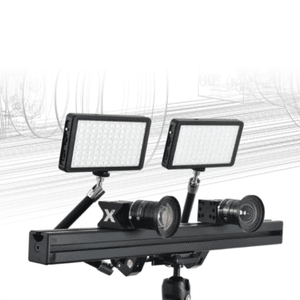
3D DIC STANDARD – Stereo Digital Image Correlation System for Strain and Deformation Analysis
View Product -
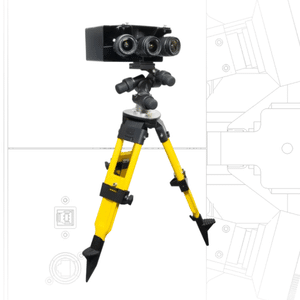
BRIDGET – DIC System for Bridge Deflection and Deformation Measurement
View Product -
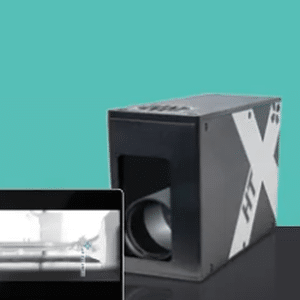
HT – High-Temperature Optical Extensometer for Furnace Testing
View Product -
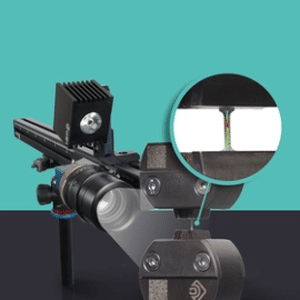
ST – Semi-Telecentric Optical Extensometer for Small Specimens
View Product
When a test engineer measures strain on a tensile, compression or bending specimen, the extensometer has to stay accurate from the first load step to failure. A clip-on extensometer touches the specimen with knife edges, so it can slip on smooth surfaces, mark soft materials such as polymers and foils, and often has to come off before the specimen breaks. A video extensometer measures the same deformation with a camera and digital image correlation (DIC) software. As nothing touches the specimen, the measurement can run through to break and also give transverse strain, necking and crack length.
Our video extensometers allow the test engineer to measure strain without contact on a universal testing machine, from a single-camera extensometer for routine quality control testing to a two-camera 3D system for research, component testing and high-temperature tests inside a furnace.
Every system is selected for the materials, test standards and testing machine your laboratory works with, and our applications engineers support you locally from selection through to commissioning on site.
Video extensometers
We offer a wide range of video extensometers commonly found in materials testing laboratories in universities, research organisations and manufacturing quality control, which can be used for tensile, compression, bending, shear, torsion and fatigue testing.
Single-camera video extensometers
A single-camera video extensometer views the specimen from one direction and measures axial and transverse strain in the plane of the image. The engineer can set one or several gauge lengths and follow necking as it develops. This type suits routine tensile testing, where the specimen stays square to the camera.
3D video extensometers
A 3D video extensometer uses two cameras that view the specimen from different angles, so it also sees movement towards and away from the cameras. The strain reading stays accurate when a specimen twists, bends out of plane or settles in the grips. It can also measure at several positions at once.
High-temperature video extensometers
A high-temperature video extensometer measures strain on a specimen inside a furnace or environmental chamber while the camera stays outside the heated zone. The engineer can then test at temperature without putting a contact extensometer into the heat.
DIC software and software kits
The DIC software acts as a sensor in the test set-up: it sends strain values to the testing machine or a data acquisition system in real time, so the test software records strain alongside load. Modules for transverse strain, torsion, crack length, full-field strain maps and 3D measurement can be added as the laboratory needs them. If you want to build a video extensometer around your own cameras and lighting, a software kit is also available.
Comparing 2D and 3D video extensometers
Both types use the same DIC software and the same real-time connection to the testing machine. The number of cameras decides how each handles movement out of the image plane.
A 2D system uses one camera and assumes the specimen surface stays at the same distance from the lens. If the specimen moves towards the camera, for example when a thin sheet buckles in compression, the image scale changes and the system reads that change as strain. For flat or round specimens in a standard tensile test, a 2D system is the simpler choice and is usually sufficient.
A 3D system locates the surface in space with two cameras, so out-of-plane movement no longer shows up as false strain. It suits curved components, compression tests on rock and research where the full strain field matters. Laboratories that are unsure can start with 2D, because two single-camera units can later be combined into a 3D system with the 3D software module.
Choosing a video extensometer for your testing machine
Start with the specimen and the test standard. The specimen length and strain at break decide the field of view, while the standard sets the gauge length and the accuracy class required under ISO 9513 or ASTM E83. As each extensometer is classified at a given field of view, check the class at the field of view you will use.
Then consider how the extensometer connects to your testing machine. The readings have to reach that machine’s controller or software, so we confirm the interface before quoting. For very fast events such as impact, a high-speed camera with DIC software may suit the test better.
Local support for your video extensometer
Our applications engineers help you choose the camera configuration, field of view and software modules before you order. We then set the system up on your testing machine, check the connection to the test software and commission it on site, and remain your local contact while the extensometer is in service.
Frequently asked questions
Can a video extensometer be added to our existing testing machine?
In most cases, yes. The DIC software sends strain readings to the testing machine or a data acquisition system in real time. We check your machine and controller before quoting.
Can we start with a 2D system and upgrade to 3D later?
Yes. A laboratory can buy one single-camera unit now and add a second camera and the 3D module when a research project needs it, which spreads the cost across budget cycles.
Can a video extensometer measure strain inside a furnace?
It cannot actually measure strain. It can take an image of how the material behaves during testing and the data will be fed into the analysis software for strain calculation. As long as the furnace has a transparent chamber window to allow for viewing, strain calculation will be possible. Tell us the maximum test temperature and the chamber you use, and we will confirm the model and its rated temperature.
Do we need to mark the specimen?
Not in every case. DIC tracks the natural texture of the specimen surface, and many metals, composites and polymers have enough texture without preparation. Smooth, reflective or transparent surfaces usually need a fine speckle pattern, although a dedicated software module handles flat reflective specimens. Describe your specimens to us and we can advise on preparation.
Can we help with your strain measurement?
If you are planning a materials testing programme or replacing a contact extensometer with a non-contact video extensometer, have a chat with us about your application.
