
A machine part or a structure moves, and the engineer has to know how far. The sensor then has to cope with vibration, shifting mounts, dust and water, which a non-contact sensor in a clean environment and a cylinder-type sensor sensitive to misalignment each handle poorly. Our rubber displacement sensors allow the maintenance, automation or test engineer to measure linear and off-axis movement on machines and structures, over measuring ranges from 20 mm to 250 mm, in conditions where vibration and installation misalignment are expected.
Every instrument is selected on several testing and environmental parameters: the measuring range, the output signal and the installation environment. To help you achieve these objectives, our in-house applications engineers can help you define the project scope and application, select the equipment, and assist with system integration and technical support.
What Is a Rubber Displacement Sensor?
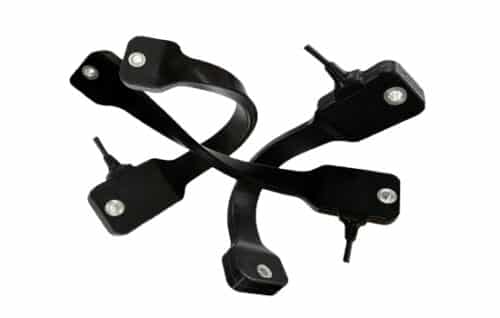
A rubber displacement sensor measures displacement through a flexible, stretchable element made of rubber. The sensor is fixed between two points, and when those points move apart or together, the rubber element stretches or relaxes. An elastic rubber displacement sensor then outputs a signal that follows the displacement. The rubber displacement sensors on this page are hyper-elastic rubber sensors that are mechanically flexible.
Rubber displacement sensors can be used as a standalone sensor or as part of a sensor system, daisy-chained with similar sensors. They can interface with a wide range of industrial computers. An elastomer displacement sensor is the same type of sensor, named for the elastomer that its sensing element is made of.
How Rubber Displacement Sensors Work
A rubber displacement sensor operates on a capacitive measurement principle. The sensing element of an elastomer displacement sensor is a stretchable strain gauge made of a hyper-elastic elastomer. When a machine or a structure stretches the sensor, the capacitance of the sensing element changes. The displacement value is then calculated from that change.
The sensor passes the result to a controller or computer as an electrical signal. The DS series, for example, gives 4 to 20 mA as standard, or 0 to 5 V or 0 to 10 V, and it updates its output signal 1000 times per second. This is fast enough for dynamic applications, where the displacement changes quickly.
Key Features
The DS series elastic rubber displacement sensors are solid-state, so they have no moving parts and need no maintenance. It is waterproof and submersible to an IP68 equivalent rating, and it has built-in environmental compensation and a weather-resistant coating that includes UV resistance. The sensor tolerates misalignment and overstroke.
The measuring range is 20, 50, 100 or 250 mm, depending on the model. The power supply is 12 to 24 V. The sensors have a choice of signal outputs and offer many customisation possibilities, including cable length (1, 3 or 10 m) and colour (black as standard, or green or red to order).
Key Advantages of Rubber Displacement Sensors
A rubber displacement measurement sensor needs no special mounting, protection or cleaning, so the installation, operation and maintenance effort and cost fall. The sensors can be installed easily, without complicated or precautionary mechanics. They have no moving parts to wear.
The DS series has an accuracy of 0.5% of full scale and a resolution of 0.025% of full scale. Its temperature coefficient is below 0.01% of full scale per °C, and it operates from -40 to 85 °C. The sensors resist vibration, extreme weather, dust and water.
Linear and Off-Axis Displacement Measurement
A cylinder-type displacement sensor, which has a rod sliding in a body, measures movement along one straight line. An elastic rubber displacement sensor measures both linear and off-axis movement, because the rubber element is flexible and can follow a movement that is not perfectly straight.
This is useful where the moving part does not travel in a straight line, or where the two mounting points shift against each other. Tell us how your part moves, and we can confirm which model suits it.
Resistance to Vibration and Installation Misalignment
The highly elastic design gives the sensor an inherent ability to resist shock, vibration and installation misalignment. A cylinder-based sensor is sensitive to vibration and misalignment. A rubber displacement sensor tolerates both, and the DS series also tolerates overstroke, which is movement beyond its stated stroke range.
As a result, an installer does not need to align the sensor precisely, and the sensor still produces accurate measurement results when it is misaligned. This reduces installation effort in places where precise alignment is difficult, such as on vehicles and structures.
Industrial Monitoring and Automation Applications
In industrial monitoring, rubber displacement sensors support machine predictive maintenance, condition monitoring, damage prevention and structural health monitoring. They are used for industrial crack monitoring. In factory automation, they provide feedback control, and the process automation industry has used them to detect faulty operations of stamping tools.
The sensors also suit industrial research and development and off-road vehicles. Tell us what you need to monitor, and we can discuss whether a rubber displacement measurement sensor suits your application.
Rubber Displacement Sensor Products
DS20 rubber displacement sensor
The DS20 measures 20 mm, with an accuracy of 0.5% of full scale and a resolution of 0.025% of full scale. It weighs approximately 76 g.
DS50 rubber displacement sensor
The DS50 measures 50 mm with the same accuracy and resolution as the DS20, and it weighs approximately 84 g.
DS100 rubber displacement sensor
The DS100 measures 100 mm, with the same accuracy and resolution, and it weighs approximately 97 g.
DS250 rubber displacement sensor
The DS250 measures 250 mm, with the same accuracy and resolution, and it weighs approximately 136 g. At maximum displacement, the force of the sensor is approximately 120 N across the series.
All four DS models use a 12 to 24 V supply, update at 1000 updates per second and carry an IP68 equivalent rating. Mounting is by a single 6.1 mm hole as standard, or twin 6.2 mm holes to order.
Frequently Asked Questions
Does a rubber displacement sensor need precise alignment?
No. The elastic design tolerates installation misalignment, and the DS series also tolerates overstroke. Tell us how the sensor will be mounted, and we can confirm the model and mounting.
What output signals are available?
The DS series gives 4 to 20 mA as standard, or 0 to 5 V and 0 to 10 V made to order. Tell us your controller or data acquisition input, and we can match the output.
Can a rubber displacement sensor work outdoors or underwater?
The DS series has an IP68 equivalent rating, is waterproof and submersible, and has a weather-resistant coating that includes UV resistance. It operates from -40 to 85 °C. Tell us the conditions and we can confirm the model.
Can rubber displacement sensors be customised?
The DS series offers many customisation possibilities, such as cable length, colour, mounting type and signal output. Tell us your requirements, and we can discuss the options.
Tell us the travel, the output signal and the installation environment, and we will help you select the sensor. To start, have a chat with us about your application.
A machine part or a structure moves, and the engineer has to know how far. The sensor then has to cope with vibration, shifting mounts, dust and water, which a non-contact sensor in a clean environment and a cylinder-type sensor sensitive to misalignment each handle poorly. Our rubber displacement sensors allow the maintenance, automation or test engineer to measure linear and off-axis movement on machines and structures, over measuring ranges from 20 mm to 250 mm, in conditions where vibration and installation misalignment are expected.
Every instrument is selected on several testing and environmental parameters: the measuring range, the output signal and the installation environment. To help you achieve these objectives, our in-house applications engineers can help you define the project scope and application, select the equipment, and assist with system integration and technical support.
What Is a Rubber Displacement Sensor?
A rubber displacement sensor measures displacement through a flexible, stretchable element made of rubber. The sensor is fixed between two points, and when those points move apart or together, the rubber element stretches or relaxes. An elastic rubber displacement sensor then outputs a signal that follows the displacement. The rubber displacement sensors on this page are hyper-elastic rubber sensors that are mechanically flexible.
Rubber displacement sensors can be used as a standalone sensor or as part of a sensor system, daisy-chained with similar sensors. They can interface with a wide range of industrial computers. An elastomer displacement sensor is the same type of sensor, named for the elastomer that its sensing element is made of.
How Rubber Displacement Sensors Work
A rubber displacement sensor operates on a capacitive measurement principle. The sensing element of an elastomer displacement sensor is a stretchable strain gauge made of a hyper-elastic elastomer. When a machine or a structure stretches the sensor, the capacitance of the sensing element changes. The displacement value is then calculated from that change.
The sensor passes the result to a controller or computer as an electrical signal. The DS series, for example, gives 4 to 20 mA as standard, or 0 to 5 V or 0 to 10 V, and it updates its output signal 1000 times per second. This is fast enough for dynamic applications, where the displacement changes quickly.
Key Features
The DS series elastic rubber displacement sensors are solid-state, so they have no moving parts and need no maintenance. It is waterproof and submersible to an IP68 equivalent rating, and it has built-in environmental compensation and a weather-resistant coating that includes UV resistance. The sensor tolerates misalignment and overstroke.
The measuring range is 20, 50, 100 or 250 mm, depending on the model. The power supply is 12 to 24 V. The sensors have a choice of signal outputs and offer many customisation possibilities, including cable length (1, 3 or 10 m) and colour (black as standard, or green or red to order).
Key Advantages of Rubber Displacement Sensors
A rubber displacement measurement sensor needs no special mounting, protection or cleaning, so the installation, operation and maintenance effort and cost fall. The sensors can be installed easily, without complicated or precautionary mechanics. They have no moving parts to wear.
The DS series has an accuracy of 0.5% of full scale and a resolution of 0.025% of full scale. Its temperature coefficient is below 0.01% of full scale per °C, and it operates from -40 to 85 °C. The sensors resist vibration, extreme weather, dust and water.
Linear and Off-Axis Displacement Measurement
A cylinder-type displacement sensor, which has a rod sliding in a body, measures movement along one straight line. An elastic rubber displacement sensor measures both linear and off-axis movement, because the rubber element is flexible and can follow a movement that is not perfectly straight.
This is useful where the moving part does not travel in a straight line, or where the two mounting points shift against each other. Tell us how your part moves, and we can confirm which model suits it.
Resistance to Vibration and Installation Misalignment
The highly elastic design gives the sensor an inherent ability to resist shock, vibration and installation misalignment. A cylinder-based sensor is sensitive to vibration and misalignment. A rubber displacement sensor tolerates both, and the DS series also tolerates overstroke, which is movement beyond its stated stroke range.
As a result, an installer does not need to align the sensor precisely, and the sensor still produces accurate measurement results when it is misaligned. This reduces installation effort in places where precise alignment is difficult, such as on vehicles and structures.
Industrial Monitoring and Automation Applications
In industrial monitoring, rubber displacement sensors support machine predictive maintenance, condition monitoring, damage prevention and structural health monitoring. They are used for industrial crack monitoring. In factory automation, they provide feedback control, and the process automation industry has used them to detect faulty operations of stamping tools.
The sensors also suit industrial research and development and off-road vehicles. Tell us what you need to monitor, and we can discuss whether a rubber displacement measurement sensor suits your application.
Rubber Displacement Sensor Products
DS20 rubber displacement sensor
The DS20 measures 20 mm, with an accuracy of 0.5% of full scale and a resolution of 0.025% of full scale. It weighs approximately 76 g.
DS50 rubber displacement sensor
The DS50 measures 50 mm with the same accuracy and resolution as the DS20, and it weighs approximately 84 g.
DS100 rubber displacement sensor
The DS100 measures 100 mm, with the same accuracy and resolution, and it weighs approximately 97 g.
DS250 rubber displacement sensor
The DS250 measures 250 mm, with the same accuracy and resolution, and it weighs approximately 136 g. At maximum displacement, the force of the sensor is approximately 120 N across the series.
All four DS models use a 12 to 24 V supply, update at 1000 updates per second and carry an IP68 equivalent rating. Mounting is by a single 6.1 mm hole as standard, or twin 6.2 mm holes to order.
Frequently Asked Questions
Does a rubber displacement sensor need precise alignment?
No. The elastic design tolerates installation misalignment, and the DS series also tolerates overstroke. Tell us how the sensor will be mounted, and we can confirm the model and mounting.
What output signals are available?
The DS series gives 4 to 20 mA as standard, or 0 to 5 V and 0 to 10 V made to order. Tell us your controller or data acquisition input, and we can match the output.
Can a rubber displacement sensor work outdoors or underwater?
The DS series has an IP68 equivalent rating, is waterproof and submersible, and has a weather-resistant coating that includes UV resistance. It operates from -40 to 85 °C. Tell us the conditions and we can confirm the model.
Can rubber displacement sensors be customised?
The DS series offers many customisation possibilities, such as cable length, colour, mounting type and signal output. Tell us your requirements, and we can discuss the options.
Tell us the travel, the output signal and the installation environment, and we will help you select the sensor. To start, have a chat with us about your application.
