
A coating on a composite part has a target thickness, and the engineer responsible for the finish has to confirm it without damaging the part. On carbon fibre reinforced polymer (CFRP), that check is harder than on metal, because the coating is generally thin and the substrate has low electrical conductivity. Our coating thickness measurement sensors allow the test or quality engineer to check paint and other insulating layers on CFRP and metal without damaging the part, from a 0 to 500 µm gauge to a 0 to 1000 µm gauge.
Every instrument is selected on several testing and environmental parameters: the substrate material, the coating thickness range and the data export requirement. To help you achieve these objectives, our in-house applications engineers can help you define the project scope and application, select the equipment, and assist with system integration and technical support.
What Are Coating Thickness Measurement Sensors?
A coating thickness sensor measures how thick a layer of paint, plastic or similar insulating coating is on a substrate. The substrate is the material underneath the coating, such as CFRP or metal. The operator places the sensor on the coated surface, and a controller displays and records the thickness value. Together, the sensor and controller form a portable coating thickness measurement system that the operator can take to the part.
The coating thickness measurement sensors on this page use microwaves, which suit CFRP and other non-conducting materials. The measurement is non-destructive, so the same part can be measured and then used.
How Coating Thickness Measurement Works
Every coating thickness measurement starts with a signal sent into the layer and a way to read what comes back. In a microwave gauge, the sensor contains a transmitter that radiates microwaves into the device under test, which is the coated part. Part of that radiation is reflected back from the part.
The sensor separates the reflected signal from the transmitted signal and passes it to a receiver. The receiver evaluates the reflected signal for its magnitude and phase. The controller then displays the resulting thickness value and records it.
Before measuring a new substrate, the operator adjusts the gauge to it. On the FSC gauges, the operator uses the plastic films of known thickness supplied with the gauge, so the gauge is matched to the substrate material in use. The adjustment data can be stored and reused later. The ISC1000 is factory calibrated, and the operator can adjust its settings for the material being measured, such as metals or CFRP.
Microwave Technology for Coating Thickness Measurement
Microwaves are a form of electromagnetic radiation, and the FSC gauges operate in the band reserved for industrial, scientific and medical (ISM) use, at 24 to 24.25 GHz. Microwave technology gives reliable measurement on dielectric and non-conducting materials such as CFRP. Dielectric materials are electrical insulators, such as paint and plastics, which is why the method suits insulating coatings.
The method is used on both metallic and non-metallic materials. It needs no coupling medium such as transducer gel, and the measured point remains unchanged. The display resolution of the FSC gauges is 1 µm or 0.01 mils, and the ISC1000 has a resolution from 1 µm.
Coating Thickness Measurement on CFRP and Non-Conductive Materials
Manufacturers prefer CFRP composite materials for their non-corrosiveness and high fatigue resistance. They still need to know the thickness of paint applied to a CFRP or metal substrate. Measuring paint thickness on CFRP is difficult, because the applied coating is generally thin and the substrate has low electrical conductivity and diverse dielectric properties. A CFRP coating thickness gauge based on microwaves gives reliable measurement on dielectric and non-conducting materials such as CFRP.
The FSC gauges are specified for CFRP, CFRP with metallic lightning protection, and metals with medium or high electrical conductivity. The substrates can be isotropic or anisotropic. The laminate structure matters: woven CFRP needs at least one layer, and laid CFRP needs at least two layers with different angles. The ISC1000 measures CFRP and metal substrates from 1 µm thickness, and on metallic substrates it gives a stable signal regardless of the electric and magnetic properties of the metal.
Measuring Paint and Insulating Coatings
These gauges measure paint and other electrically insulating layers, such as plastic. When a paint system has several layers, the FSC gauges measure the total thickness directly. A primer and a topcoat therefore give one combined value, not a value for each coat.
The ISC1000 is specified for dry, electrically insulating coatings on flat and curved surfaces, with layer thicknesses from 0 to 1000 µm, so the operator should measure after the coating has dried. If your coating is electrically conductive, tell us before you choose, because these instruments are specified for insulating layers.
Key Advantages of Coating Thickness Measurement Sensors
A microwave coating thickness sensor works on a non-destructive, wear-free principle, so it has no influence on the paint or the substrate. It needs no coupling medium, and no minimum layer thickness applies. On the FSC gauges, a single measurement takes about 2 to 3 seconds.
The FSC gauges have configurable tilt prevention. They also keep statistical functions with recording and data export: they calculate minimum, maximum, counter, median and standard deviation, and readings export through a USB port for further processing. The ISC1000 gives an acoustic signal for incorrect measurements. Both the FSC gauges and the ISC1000 are battery powered.
Applications of Coating Thickness Measurement
Aviation and defence manufacturers use a CFRP coating thickness gauge to check paint on CFRP structures, including CFRP with metallic lightning protection. The ISC1000 suits industrial and military applications, where it is used in quality inspections, either as random checks or as static measurements.
Wind turbine blade manufacturers can check paint thickness during production. In advanced and high-end manufacturing, coating and substrate materials can be expensive and hard to acquire, and a non-destructive check leaves the part undamaged. Tell us your part, your substrate and your coating system, and we will confirm which gauge fits.
Coating Thickness Measurement Products
The right coating thickness measurement system depends on your coating thickness, your substrate and your inspection routine.
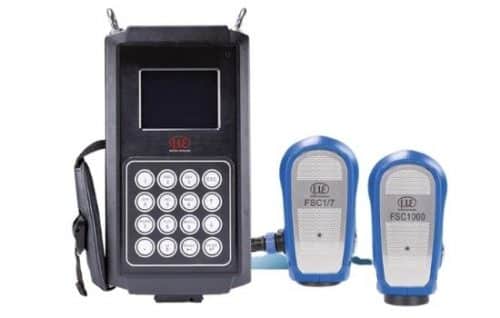
FSC1/7 paint thickness gauge
The FSC1/7 measures from 0 to 500 µm, with linearity of ≤ ±3 µm and repeatability of ≤ 2 µm. It suits paint systems that stay within 500 µm and need the tightest repeatability of the three gauges.
FSC1000 paint thickness gauge
The FSC1000 measures from 0 to 1000 µm, with linearity of ≤ ±5 µm and repeatability of ≤ 4 µm. It covers thicker paint systems on the same substrates as the FSC1/7. Both FSC models come with calibration films, a charger and a carry case.
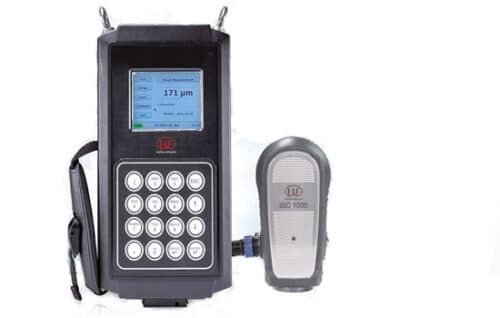
ISC1000 coating thickness gauge
The ISC1000 has a 1 mm measuring range, a resolution from 1 µm and repeatability of 4 µm. It is battery powered and factory calibrated, with a colour touch display, a keypad and a USB interface. Its settings can be adjusted for metal or CFRP substrates.
Choosing between the gauges
All three gauges use microwaves to measure the total thickness of an insulating layer, and all three have a USB interface. Start with the substrate and the coating. Is the substrate CFRP, CFRP with lightning protection or metal, and is the coating dry and electrically insulating? Then check the thickness range: the FSC1/7 covers coatings within 500 µm, and anything up to 1000 µm calls for the FSC1000 or the ISC1000.
Next, consider how you will use the readings. Will an inspector take random spot checks, or does each part need a recorded series for a quality record? We can talk through your part, the coating system and the reporting you need before you choose.
Support from our application engineers
We service customers across Australia, New Zealand and the Pacific Islands from offices in Melbourne, Sydney, Brisbane, Adelaide and Perth. Our engineers can visit your site for demonstration and testing on your own parts, and they assist you as you bring the gauge into your inspection routine. After-sales technical support follows the purchase.
Frequently Asked Questions
Can the gauges measure paint on CFRP with lightning protection?
The FSC gauges are specified for CFRP with metallic lightning protection, as well as for plain CFRP and metals. Tell us your laminate and we can confirm which gauge suits it.
Can a gauge measure each layer of a multi-layer paint system?
The FSC gauges measure the total thickness of a multi-layer paint system directly. A system with several coats therefore gives one combined value, not a value for each coat.
How do I adjust a gauge to my substrate?
On the FSC gauges, the operator adjusts the gauge to the substrate using the plastic films of known thickness supplied with it. The adjustment data can be stored and reused later, so a repeated job does not need a new adjustment. The FSC linearity figures depend on this adjustment, which is based on support points.
Can I keep a record of the readings?
Yes. The FSC gauges store measured data with statistical functions (minimum, maximum, counter, median and standard deviation) and export it through a USB port.
Tell us the substrate, the coating and the thickness range, and we will help you select the gauge. To start, have a chat with us about your application.
A coating on a composite part has a target thickness, and the engineer responsible for the finish has to confirm it without damaging the part. On carbon fibre reinforced polymer (CFRP), that check is harder than on metal, because the coating is generally thin and the substrate has low electrical conductivity. Our coating thickness measurement sensors allow the test or quality engineer to check paint and other insulating layers on CFRP and metal without damaging the part, from a 0 to 500 µm gauge to a 0 to 1000 µm gauge.
Every instrument is selected on several testing and environmental parameters: the substrate material, the coating thickness range and the data export requirement. To help you achieve these objectives, our in-house applications engineers can help you define the project scope and application, select the equipment, and assist with system integration and technical support.
What Are Coating Thickness Measurement Sensors?
A coating thickness sensor measures how thick a layer of paint, plastic or similar insulating coating is on a substrate. The substrate is the material underneath the coating, such as CFRP or metal. The operator places the sensor on the coated surface, and a controller displays and records the thickness value. Together, the sensor and controller form a portable coating thickness measurement system that the operator can take to the part.
The coating thickness measurement sensors on this page use microwaves, which suit CFRP and other non-conducting materials. The measurement is non-destructive, so the same part can be measured and then used.
How Coating Thickness Measurement Works
Every coating thickness measurement starts with a signal sent into the layer and a way to read what comes back. In a microwave gauge, the sensor contains a transmitter that radiates microwaves into the device under test, which is the coated part. Part of that radiation is reflected back from the part.
The sensor separates the reflected signal from the transmitted signal and passes it to a receiver. The receiver evaluates the reflected signal for its magnitude and phase. The controller then displays the resulting thickness value and records it.
Before measuring a new substrate, the operator adjusts the gauge to it. On the FSC gauges, the operator uses the plastic films of known thickness supplied with the gauge, so the gauge is matched to the substrate material in use. The adjustment data can be stored and reused later. The ISC1000 is factory calibrated, and the operator can adjust its settings for the material being measured, such as metals or CFRP.
Microwave Technology for Coating Thickness Measurement
Microwaves are a form of electromagnetic radiation, and the FSC gauges operate in the band reserved for industrial, scientific and medical (ISM) use, at 24 to 24.25 GHz. Microwave technology gives reliable measurement on dielectric and non-conducting materials such as CFRP. Dielectric materials are electrical insulators, such as paint and plastics, which is why the method suits insulating coatings.
The method is used on both metallic and non-metallic materials. It needs no coupling medium such as transducer gel, and the measured point remains unchanged. The display resolution of the FSC gauges is 1 µm or 0.01 mils, and the ISC1000 has a resolution from 1 µm.
Coating Thickness Measurement on CFRP and Non-Conductive Materials
Manufacturers prefer CFRP composite materials for their non-corrosiveness and high fatigue resistance. They still need to know the thickness of paint applied to a CFRP or metal substrate. Measuring paint thickness on CFRP is difficult, because the applied coating is generally thin and the substrate has low electrical conductivity and diverse dielectric properties. A CFRP coating thickness gauge based on microwaves gives reliable measurement on dielectric and non-conducting materials such as CFRP.
The FSC gauges are specified for CFRP, CFRP with metallic lightning protection, and metals with medium or high electrical conductivity. The substrates can be isotropic or anisotropic. The laminate structure matters: woven CFRP needs at least one layer, and laid CFRP needs at least two layers with different angles. The ISC1000 measures CFRP and metal substrates from 1 µm thickness, and on metallic substrates it gives a stable signal regardless of the electric and magnetic properties of the metal.
Measuring Paint and Insulating Coatings
These gauges measure paint and other electrically insulating layers, such as plastic. When a paint system has several layers, the FSC gauges measure the total thickness directly. A primer and a topcoat therefore give one combined value, not a value for each coat.
The ISC1000 is specified for dry, electrically insulating coatings on flat and curved surfaces, with layer thicknesses from 0 to 1000 µm, so the operator should measure after the coating has dried. If your coating is electrically conductive, tell us before you choose, because these instruments are specified for insulating layers.
Key Advantages of Coating Thickness Measurement Sensors
A microwave coating thickness sensor works on a non-destructive, wear-free principle, so it has no influence on the paint or the substrate. It needs no coupling medium, and no minimum layer thickness applies. On the FSC gauges, a single measurement takes about 2 to 3 seconds.
The FSC gauges have configurable tilt prevention. They also keep statistical functions with recording and data export: they calculate minimum, maximum, counter, median and standard deviation, and readings export through a USB port for further processing. The ISC1000 gives an acoustic signal for incorrect measurements. Both the FSC gauges and the ISC1000 are battery powered.
Applications of Coating Thickness Measurement
Aviation and defence manufacturers use a CFRP coating thickness gauge to check paint on CFRP structures, including CFRP with metallic lightning protection. The ISC1000 suits industrial and military applications, where it is used in quality inspections, either as random checks or as static measurements.
Wind turbine blade manufacturers can check paint thickness during production. In advanced and high-end manufacturing, coating and substrate materials can be expensive and hard to acquire, and a non-destructive check leaves the part undamaged. Tell us your part, your substrate and your coating system, and we will confirm which gauge fits.
Coating Thickness Measurement Products
The right coating thickness measurement system depends on your coating thickness, your substrate and your inspection routine.
FSC1/7 paint thickness gauge
The FSC1/7 measures from 0 to 500 µm, with linearity of ≤ ±3 µm and repeatability of ≤ 2 µm. It suits paint systems that stay within 500 µm and need the tightest repeatability of the three gauges.
FSC1000 paint thickness gauge
The FSC1000 measures from 0 to 1000 µm, with linearity of ≤ ±5 µm and repeatability of ≤ 4 µm. It covers thicker paint systems on the same substrates as the FSC1/7. Both FSC models come with calibration films, a charger and a carry case.
ISC1000 coating thickness gauge
The ISC1000 has a 1 mm measuring range, a resolution from 1 µm and repeatability of 4 µm. It is battery powered and factory calibrated, with a colour touch display, a keypad and a USB interface. Its settings can be adjusted for metal or CFRP substrates.
Choosing between the gauges
All three gauges use microwaves to measure the total thickness of an insulating layer, and all three have a USB interface. Start with the substrate and the coating. Is the substrate CFRP, CFRP with lightning protection or metal, and is the coating dry and electrically insulating? Then check the thickness range: the FSC1/7 covers coatings within 500 µm, and anything up to 1000 µm calls for the FSC1000 or the ISC1000.
Next, consider how you will use the readings. Will an inspector take random spot checks, or does each part need a recorded series for a quality record? We can talk through your part, the coating system and the reporting you need before you choose.
Support from our application engineers
We service customers across Australia, New Zealand and the Pacific Islands from offices in Melbourne, Sydney, Brisbane, Adelaide and Perth. Our engineers can visit your site for demonstration and testing on your own parts, and they assist you as you bring the gauge into your inspection routine. After-sales technical support follows the purchase.
Frequently Asked Questions
Can the gauges measure paint on CFRP with lightning protection?
The FSC gauges are specified for CFRP with metallic lightning protection, as well as for plain CFRP and metals. Tell us your laminate and we can confirm which gauge suits it.
Can a gauge measure each layer of a multi-layer paint system?
The FSC gauges measure the total thickness of a multi-layer paint system directly. A system with several coats therefore gives one combined value, not a value for each coat.
How do I adjust a gauge to my substrate?
On the FSC gauges, the operator adjusts the gauge to the substrate using the plastic films of known thickness supplied with it. The adjustment data can be stored and reused later, so a repeated job does not need a new adjustment. The FSC linearity figures depend on this adjustment, which is based on support points.
Can I keep a record of the readings?
Yes. The FSC gauges store measured data with statistical functions (minimum, maximum, counter, median and standard deviation) and export it through a USB port.
Tell us the substrate, the coating and the thickness range, and we will help you select the gauge. To start, have a chat with us about your application.
