
The problem
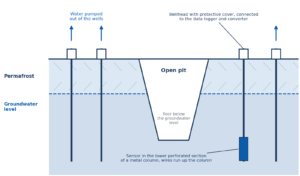
Open pit mine groundwater monitoring starts with the wells that keep a pit dry. Where a pit reaches below the water table, groundwater has to be pumped out constantly or the pit would flood.
Australian mines know this situation. Where mining reaches below the water table, as it does in parts of the Pilbara in Western Australia, groundwater that seeps into the pit is pumped out through wells so the ore can be mined dry.
One real example is the Chernogorsk open-pit mine in the Norilsk region of northern Siberia, which holds deposits of gold and platinum. Its pit reaches far below the groundwater level and would soon flood if water were not constantly pumped out of nearby wells. A geological exploration company that specialises in well boring and groundwater monitoring keeps watch on the water there.
The mine sits in the northern Siberian tundra, where winters are bitterly cold and the upper parts of the wells are frozen in permafrost. The groundwater lies far beneath the frozen soil, and the research needs its level and temperature over time. From them come the parameters of the groundwater supply, the filtration parameters and the characteristics of a tectonic fault line, which in turn can say something about the precious metals that remain in the ground.
The approach
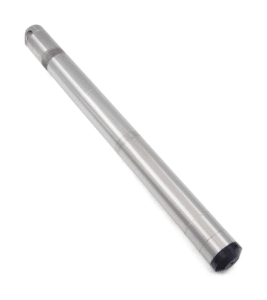
Watching a water level far below frozen ground starts with a logger that looks after itself. For the experimental filtration work and hydrological research, the wells were equipped with autonomous DCX-22SG data loggers, the sealed gauge version of the DCX-22 range. They monitor the level and temperature of the water under the permafrost.
Each sensor is mounted in the lower perforated section of a metal column, and its wires run up through the column. At the top, the wellhead has a protective metal covering and is connected electrically to the data logger, which transmits its data through a converter.
Products used
The loggers are DCX-22SG autonomous data loggers. The DCX-22 range has a long-lasting battery, data can be collected by hand or sent remotely with a separate transmission unit, and the supplied software configures the logger, shows the data as graphs, corrects it with air pressure values and exports it. For digital pressure logging in the field, the LEO Ultimate digital pressure gauge has a built-in data logger and sends its readings to a PC over USB-C or to a phone or tablet over Bluetooth.
Outcomes
- Open-pit mine groundwater monitoring follows the level and temperature of the groundwater under the permafrost.
- The results identify the parameters of the groundwater supply.
- They also clarify the filtration parameters and the characteristics of the tectonic fault line.
- That can give important information on the deposits of precious metals that remain.
- The loggers work on their own and pass their data on through a converter.
