
A gap, a position or a thickness has to be measured to a few micrometres or better, and the part cannot be touched. The sensor also has to suit the measuring range, the number of channels and the environment it will sit in. Our capacitive sensors allow the test or process engineer to measure displacement, distance, position and thickness on electrically conductive targets without contact, over measuring ranges from 0.05 mm to 20 mm, from a handheld gap gauge to a multi-channel system with up to 8 channels.
Every instrument is selected on several testing and environmental parameters: the measuring range, the number of channels and the operating environment. To help you achieve these objectives, our in-house applications engineers can help you define the project scope and application, select the equipment, and assist with system integration and technical support.
What Are Capacitive Sensors?
Capacitive sensors measure displacement, distance, position and thickness without touching the target. They work on all types of electrically conductive materials, which makes them popular as measurement tools in laboratories and industrial environments. A capacitive displacement sensor, a capacitive position sensor and a capacitive measurement sensor are different names for the same kind of instrument, used for different measurement tasks.
A complete capacitive system consists of a sensor, a connecting cable, a controller and an output cable. The sensors and controllers are fully compatible with each other, and they can be interchanged to suit a different measuring range. The system can also be adapted to customer-specific measurement requirements.
How Capacitive Displacement Measurement Works
Capacitive sensors operate on the idea of an ideal plate-type capacitor. The sensor forms one plate of the capacitor, and the conductive target forms the other plate. The space between the two plates is the gap that the sensor measures.
When the target moves, the gap between the plates changes, and the capacitance of the arrangement changes with it. The controller measures this change and converts it into an output signal that follows the displacement. When the measurement is carried out in a clean environment, a capacitive displacement sensor can reach sub-nanometre resolution.
Key Features of Capacitive Sensors
Capacitive displacement sensors in the capaNCDT range come as cylindrical or flat sensors, with different types of sockets, and with measuring ranges from 0.05 mm to 10 mm. They can be interchanged without calibration, and all of them can be used in clean and ultra-high vacuum environments. The measuring range required decides which sensor to select.
The controllers range from compact single-channel systems to modular multi-channel systems. The capaNCDT6200 and 6228 expand to 4 channels, and the capaNCDT6500 combines up to 8 channels. The capaNCDT6200 and the capaNCDT6500 are configured through a web interface. The single-channel systems have an analog output, and some models add an RS485 interface.
Key Advantages of Capacitive Sensors
A capacitive position sensor measures without contact, so it does not touch the part under test. It measures displacement, distance, position and thickness on any electrically conductive material. Sensors can be replaced by another sensor without calibration.
The industrial capaNCDT61x0/IP is protected to IP68 and is ready to use without on-site calibration. It has good temperature stability and is immune to magnetic interference. The systems offer bandwidths of 1 kHz and 20 kHz, and the capaNCDT6110 and 61×0/IP have a linearity of 0.01% of full scale.
Non-Contact Measurement of Conductive Materials
A capacitive measurement sensor works on any electrically conductive material. The sensor does not touch the target, so it suits parts that move or rotate, such as a brake disc. The same type of sensor measures the gap to a surface, the position of a part and thickness.
Bestech supplies capacitive systems for specific non-contact tasks. The capaNCDT61x0/IP measures air gaps in machinery. The MD6-22 handheld gauge measures single-sided or double-sided gaps, such as the rotor gap in wind turbines. The capaNCDT DTV measures the thickness of brake discs. If your target is not electrically conductive, tell us before you choose.
Precision, Resolution and Measurement Stability
The capaNCDT sensors have a resolution as fine as 0.0375 nm. The capaNCDT6200 has a resolution of 0.0005% of full scale, and the capaNCDT6228 has a resolution from 10 nm static and 80 nm dynamic. The capaNCDT6500 is designed for extremely high precision and resolution, and it reaches sub-nanometre resolution.
Stability depends on the system. The capaNCDT6228 uses a temperature-resistant sensor and an interference-resistant coaxial cable with a drain wire, so it is not affected by temperature fluctuations and electromagnetic interference. The capaNCDT61x0/IP has good temperature stability and immunity to magnetic interference. The MD6-22 has a resolution of 0.02% of full scale output and a linearity of 0.2% of full scale output.
Industrial and OEM Applications
In industrial applications, capacitive displacement sensors measure air gaps in machinery. In laboratories and the semiconductor industry, the capaNCDT6500 measures position at very high resolution. The capaNCDT611x suits almost all measuring tasks and large-volume applications such as OEM, in a compact single-channel system.
If you are designing a capacitive displacement sensor into your own product, the capaNCDT sensors can be adapted to customer-specific requirements. The capaNCDT6110 can be customised with a cable length up to 2 m, and the capaNCDT6120 can also be customised up to 2 m. Tell us the range, the cable length and the volume, and we will talk through the options.
Capacitive Sensor Products
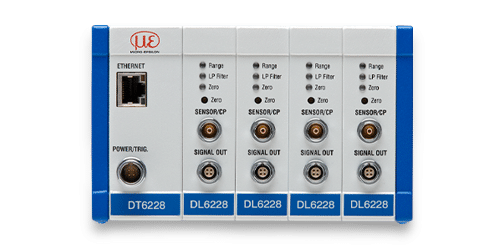
capaNCDT6228 temperature-resistant system
The capaNCDT6228 pairs a temperature-resistant sensor with a high-precision controller. Its measuring range is 1 to 20 mm, and the resolution is from 10 nm static and 80 nm dynamic. The controller is modular and expands up to 4 channels, and several control units can be synchronised.
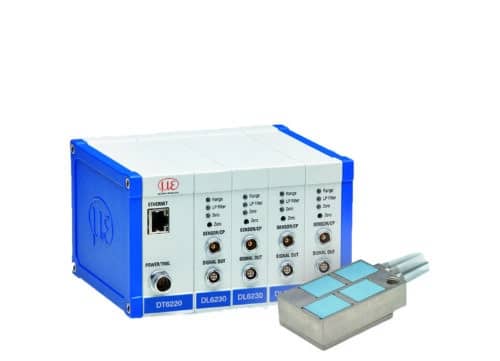
capaNCDT DTV brake disc thickness system
The capaNCDT DTV is designed for measuring the thickness of brake discs. It has a multi-channel sensor for multi-track measurement and a case for mobile and field use. It works on the differential principle and calculates the thickness deviation while the disc rotates, with dynamic measurement up to 20 kHz.
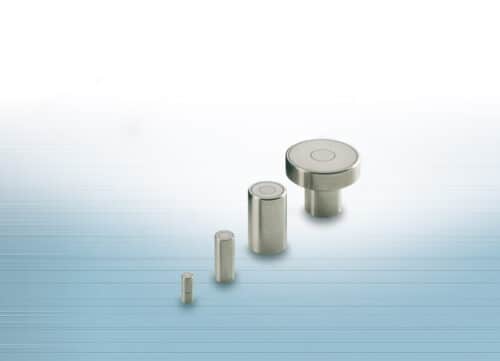
capaNCDT sensors
The capaNCDT sensors are cylindrical or flat, with different socket types, and measure from 0.05 mm to 10 mm. They can be interchanged without calibration, and all of them suit clean and ultra-high vacuum environments.
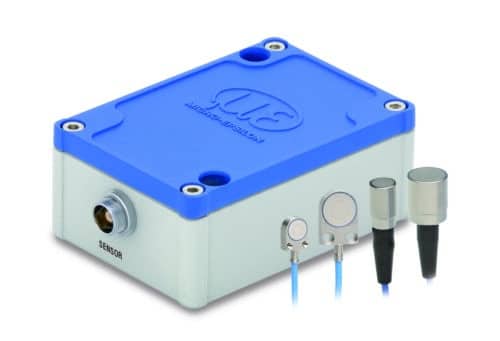
capaNCDT611x compact single-channel system
The capaNCDT611x is a compact, entry-level, single-channel analog system with a linearity of 0.01% of full scale. The capaNCDT6110 has a 1 kHz bandwidth and can be customised with a cable up to 2 m. The capaNCDT6112 is designed for dynamic measurement up to 20 kHz.
capaNCDT6120 compact system with RS485
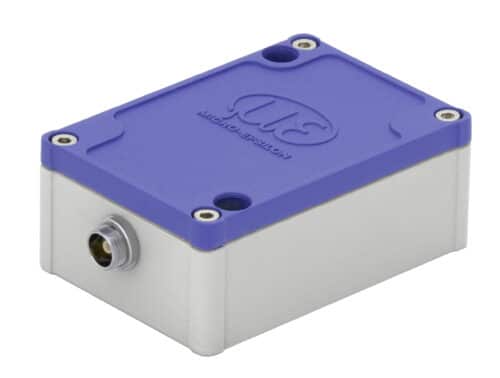
The capaNCDT6120 is a compact, entry-level, single-channel system with analog and RS485 interfaces. It fits restricted spaces, has a 1 kHz bandwidth and a linearity of 0.05% of full scale, and can be customised with a cable up to 2 m.
capaNCDT61x0/IP industrial system
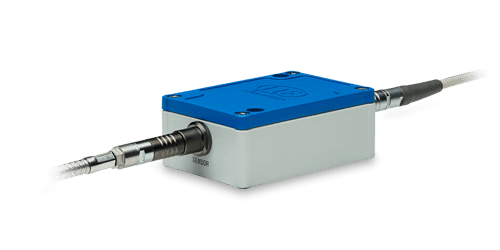
The capaNCDT61x0/IP is an industrial system protected to IP68 and ready to use without on-site calibration. It has a 1 kHz bandwidth and a linearity of 0.01% of full scale. The outputs are analog and RS485, and it measures air gaps in machinery.
capaNCDT6200 modular multi-channel system
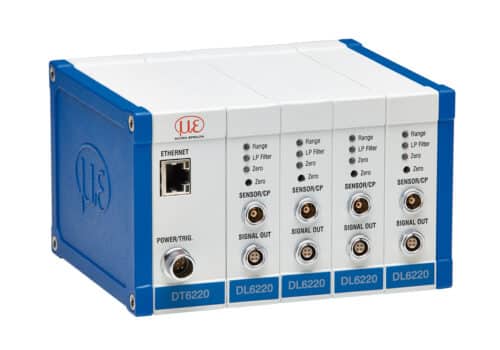
The capaNCDT6200 combines up to 4 channels and consists of a control unit and a demodulator. It has a bandwidth of up to 20 kHz and a resolution of 0.0005% of full scale. It is configured through a web browser over Ethernet and can be used on a benchtop or mounted on a wall.
capaNCDT6500 high resolution system
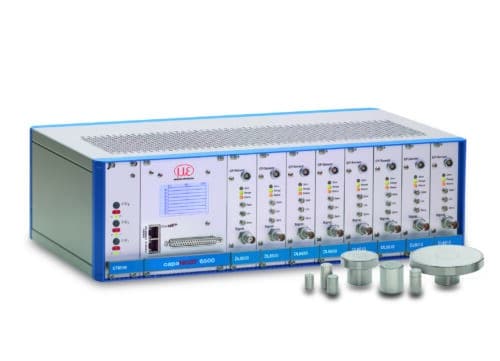
The capaNCDT6500 combines up to 8 channels, with a preamplifier between each sensor and the signal conditioning electronics. It reaches sub-nanometre resolution and is configured through a web interface. It suits position measurement in the semiconductor industry and in laboratories.
MD6-22 handheld capacitive gauge
The MD6-22 is a dual-channel handheld gap gauge with up to 5 hours of battery life and touch operation. It works with all capacitive sensors from the same range and measures single-sided or double-sided gaps. Its frequency response is 100 Hz, and it operates from 10 to 50 °C with IP30 protection.
Frequently Asked Questions
What can a capacitive displacement sensor measure?
A capacitive displacement sensor measures displacement, distance, position and thickness on electrically conductive materials, without touching the target. Tell us your target material and the range you need, and we can confirm which sensor suits it.
How do I choose a capacitive controller?
Choose by the number of channels and the bandwidth. The single-channel systems have a 1 kHz bandwidth, with the capaNCDT6112 reaching 20 kHz. The capaNCDT6200 and 6228 combine up to 4 channels, and the capaNCDT6500 up to 8 channels. Tell us your channel count, speed and interface, and we can match the controller.
Do I need to calibrate a sensor after replacing it?
The capaNCDT sensors can be interchanged without calibration, and the capaNCDT61x0/IP is ready to use without on-site calibration. Tell us your system and we can confirm what applies.
Can a capacitive system be adapted for OEM volumes?
The capaNCDT sensors can be adapted to customer-specific measurement requirements, and the capaNCDT611x suits large-volume applications such as OEM. Tell us your volume, measuring range and cable length, and we can discuss which system suits your product.
Tell us the measuring range, the number of channels and the environment, and we will help you select the sensor and controller. To start, have a chat with us about your application.
-
Micro Epsilon CapaNCDT6228 Capacitive Displacement Sensors
View Product -
capaNCDT DTV
View Product -
CapaNCDT sensors
View Product -
capaNCDT611x | Compact single channel capacitive measurement system
View Product -
capaNCDT6120 | Compact single channel capacitive systems with RS 485 interface
View Product -
capaNCDT61x0/IP | Capacitive sensors for industrial applications
View Product -
capaNCDT6200 | Modular multi-channel capacitive measurement system
View Product -
capaNCDT6500 | High resolution capacitive measurement system
View Product -
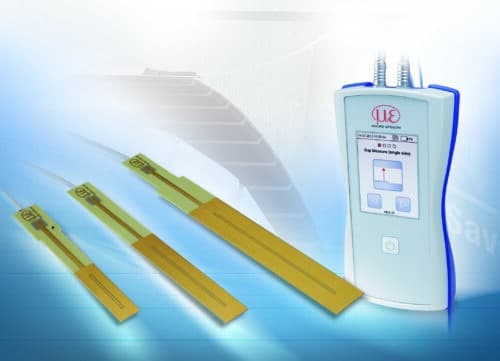
MD6-22 | High precision handheld capacitive gauge
View Product
A gap, a position or a thickness has to be measured to a few micrometres or better, and the part cannot be touched. The sensor also has to suit the measuring range, the number of channels and the environment it will sit in. Our capacitive sensors allow the test or process engineer to measure displacement, distance, position and thickness on electrically conductive targets without contact, over measuring ranges from 0.05 mm to 20 mm, from a handheld gap gauge to a multi-channel system with up to 8 channels.
Every instrument is selected on several testing and environmental parameters: the measuring range, the number of channels and the operating environment. To help you achieve these objectives, our in-house applications engineers can help you define the project scope and application, select the equipment, and assist with system integration and technical support.
What Are Capacitive Sensors?
Capacitive sensors measure displacement, distance, position and thickness without touching the target. They work on all types of electrically conductive materials, which makes them popular as measurement tools in laboratories and industrial environments. A capacitive displacement sensor, a capacitive position sensor and a capacitive measurement sensor are different names for the same kind of instrument, used for different measurement tasks.
A complete capacitive system consists of a sensor, a connecting cable, a controller and an output cable. The sensors and controllers are fully compatible with each other, and they can be interchanged to suit a different measuring range. The system can also be adapted to customer-specific measurement requirements.
How Capacitive Displacement Measurement Works
Capacitive sensors operate on the idea of an ideal plate-type capacitor. The sensor forms one plate of the capacitor, and the conductive target forms the other plate. The space between the two plates is the gap that the sensor measures.
When the target moves, the gap between the plates changes, and the capacitance of the arrangement changes with it. The controller measures this change and converts it into an output signal that follows the displacement. When the measurement is carried out in a clean environment, a capacitive displacement sensor can reach sub-nanometre resolution.
Key Features of Capacitive Sensors
Capacitive displacement sensors in the capaNCDT range come as cylindrical or flat sensors, with different types of sockets, and with measuring ranges from 0.05 mm to 10 mm. They can be interchanged without calibration, and all of them can be used in clean and ultra-high vacuum environments. The measuring range required decides which sensor to select.
The controllers range from compact single-channel systems to modular multi-channel systems. The capaNCDT6200 and 6228 expand to 4 channels, and the capaNCDT6500 combines up to 8 channels. The capaNCDT6200 and the capaNCDT6500 are configured through a web interface. The single-channel systems have an analog output, and some models add an RS485 interface.
Key Advantages of Capacitive Sensors
A capacitive position sensor measures without contact, so it does not touch the part under test. It measures displacement, distance, position and thickness on any electrically conductive material. Sensors can be replaced by another sensor without calibration.
The industrial capaNCDT61x0/IP is protected to IP68 and is ready to use without on-site calibration. It has good temperature stability and is immune to magnetic interference. The systems offer bandwidths of 1 kHz and 20 kHz, and the capaNCDT6110 and 61×0/IP have a linearity of 0.01% of full scale.
Non-Contact Measurement of Conductive Materials
A capacitive measurement sensor works on any electrically conductive material. The sensor does not touch the target, so it suits parts that move or rotate, such as a brake disc. The same type of sensor measures the gap to a surface, the position of a part and thickness.
Bestech supplies capacitive systems for specific non-contact tasks. The capaNCDT61x0/IP measures air gaps in machinery. The MD6-22 handheld gauge measures single-sided or double-sided gaps, such as the rotor gap in wind turbines. The capaNCDT DTV measures the thickness of brake discs. If your target is not electrically conductive, tell us before you choose.
Precision, Resolution and Measurement Stability
The capaNCDT sensors have a resolution as fine as 0.0375 nm. The capaNCDT6200 has a resolution of 0.0005% of full scale, and the capaNCDT6228 has a resolution from 10 nm static and 80 nm dynamic. The capaNCDT6500 is designed for extremely high precision and resolution, and it reaches sub-nanometre resolution.
Stability depends on the system. The capaNCDT6228 uses a temperature-resistant sensor and an interference-resistant coaxial cable with a drain wire, so it is not affected by temperature fluctuations and electromagnetic interference. The capaNCDT61x0/IP has good temperature stability and immunity to magnetic interference. The MD6-22 has a resolution of 0.02% of full scale output and a linearity of 0.2% of full scale output.
Industrial and OEM Applications
In industrial applications, capacitive displacement sensors measure air gaps in machinery. In laboratories and the semiconductor industry, the capaNCDT6500 measures position at very high resolution. The capaNCDT611x suits almost all measuring tasks and large-volume applications such as OEM, in a compact single-channel system.
If you are designing a capacitive displacement sensor into your own product, the capaNCDT sensors can be adapted to customer-specific requirements. The capaNCDT6110 can be customised with a cable length up to 2 m, and the capaNCDT6120 can also be customised up to 2 m. Tell us the range, the cable length and the volume, and we will talk through the options.
Capacitive Sensor Products
capaNCDT6228 temperature-resistant system
The capaNCDT6228 pairs a temperature-resistant sensor with a high-precision controller. Its measuring range is 1 to 20 mm, and the resolution is from 10 nm static and 80 nm dynamic. The controller is modular and expands up to 4 channels, and several control units can be synchronised.
capaNCDT DTV brake disc thickness system
The capaNCDT DTV is designed for measuring the thickness of brake discs. It has a multi-channel sensor for multi-track measurement and a case for mobile and field use. It works on the differential principle and calculates the thickness deviation while the disc rotates, with dynamic measurement up to 20 kHz.
capaNCDT sensors
The capaNCDT sensors are cylindrical or flat, with different socket types, and measure from 0.05 mm to 10 mm. They can be interchanged without calibration, and all of them suit clean and ultra-high vacuum environments.
capaNCDT611x compact single-channel system
The capaNCDT611x is a compact, entry-level, single-channel analog system with a linearity of 0.01% of full scale. The capaNCDT6110 has a 1 kHz bandwidth and can be customised with a cable up to 2 m. The capaNCDT6112 is designed for dynamic measurement up to 20 kHz.
capaNCDT6120 compact system with RS485
The capaNCDT6120 is a compact, entry-level, single-channel system with analog and RS485 interfaces. It fits restricted spaces, has a 1 kHz bandwidth and a linearity of 0.05% of full scale, and can be customised with a cable up to 2 m.
capaNCDT61x0/IP industrial system
The capaNCDT61x0/IP is an industrial system protected to IP68 and ready to use without on-site calibration. It has a 1 kHz bandwidth and a linearity of 0.01% of full scale. The outputs are analog and RS485, and it measures air gaps in machinery.
capaNCDT6200 modular multi-channel system
The capaNCDT6200 combines up to 4 channels and consists of a control unit and a demodulator. It has a bandwidth of up to 20 kHz and a resolution of 0.0005% of full scale. It is configured through a web browser over Ethernet and can be used on a benchtop or mounted on a wall.
capaNCDT6500 high resolution system
The capaNCDT6500 combines up to 8 channels, with a preamplifier between each sensor and the signal conditioning electronics. It reaches sub-nanometre resolution and is configured through a web interface. It suits position measurement in the semiconductor industry and in laboratories.
MD6-22 handheld capacitive gauge
The MD6-22 is a dual-channel handheld gap gauge with up to 5 hours of battery life and touch operation. It works with all capacitive sensors from the same range and measures single-sided or double-sided gaps. Its frequency response is 100 Hz, and it operates from 10 to 50 °C with IP30 protection.
Frequently Asked Questions
What can a capacitive displacement sensor measure?
A capacitive displacement sensor measures displacement, distance, position and thickness on electrically conductive materials, without touching the target. Tell us your target material and the range you need, and we can confirm which sensor suits it.
How do I choose a capacitive controller?
Choose by the number of channels and the bandwidth. The single-channel systems have a 1 kHz bandwidth, with the capaNCDT6112 reaching 20 kHz. The capaNCDT6200 and 6228 combine up to 4 channels, and the capaNCDT6500 up to 8 channels. Tell us your channel count, speed and interface, and we can match the controller.
Do I need to calibrate a sensor after replacing it?
The capaNCDT sensors can be interchanged without calibration, and the capaNCDT61x0/IP is ready to use without on-site calibration. Tell us your system and we can confirm what applies.
Can a capacitive system be adapted for OEM volumes?
The capaNCDT sensors can be adapted to customer-specific measurement requirements, and the capaNCDT611x suits large-volume applications such as OEM. Tell us your volume, measuring range and cable length, and we can discuss which system suits your product.
Tell us the measuring range, the number of channels and the environment, and we will help you select the sensor and controller. To start, have a chat with us about your application.
