
The problem
When heavy rainfall or an unexpected storm hits, a sewer network can quickly reach its maximum capacity and overflow. Overflow weirs act as a physical relief structure within the sewerage network to prevent it from surcharging during a high flow event. When the water rises above the top of the weir, the excess water spills over into a nearby water channel such as a river, creek, canal or storage basin. This keeps the water upstream at a safe and controlled level.
The water that spills over has not been treated, so the network engineers at a European water utility needed to know where overflows occurred, how often and in what volume. With that record, they could report each event and argue for capacity upgrades. Their overflow chambers sat under manhole covers in roads and footpaths, with no mains power available. A technician had to drive to each chamber after every storm to take a reading. By that time the water had receded, so the reading could not show how high the water had risen above the weir or for how long.
The solution
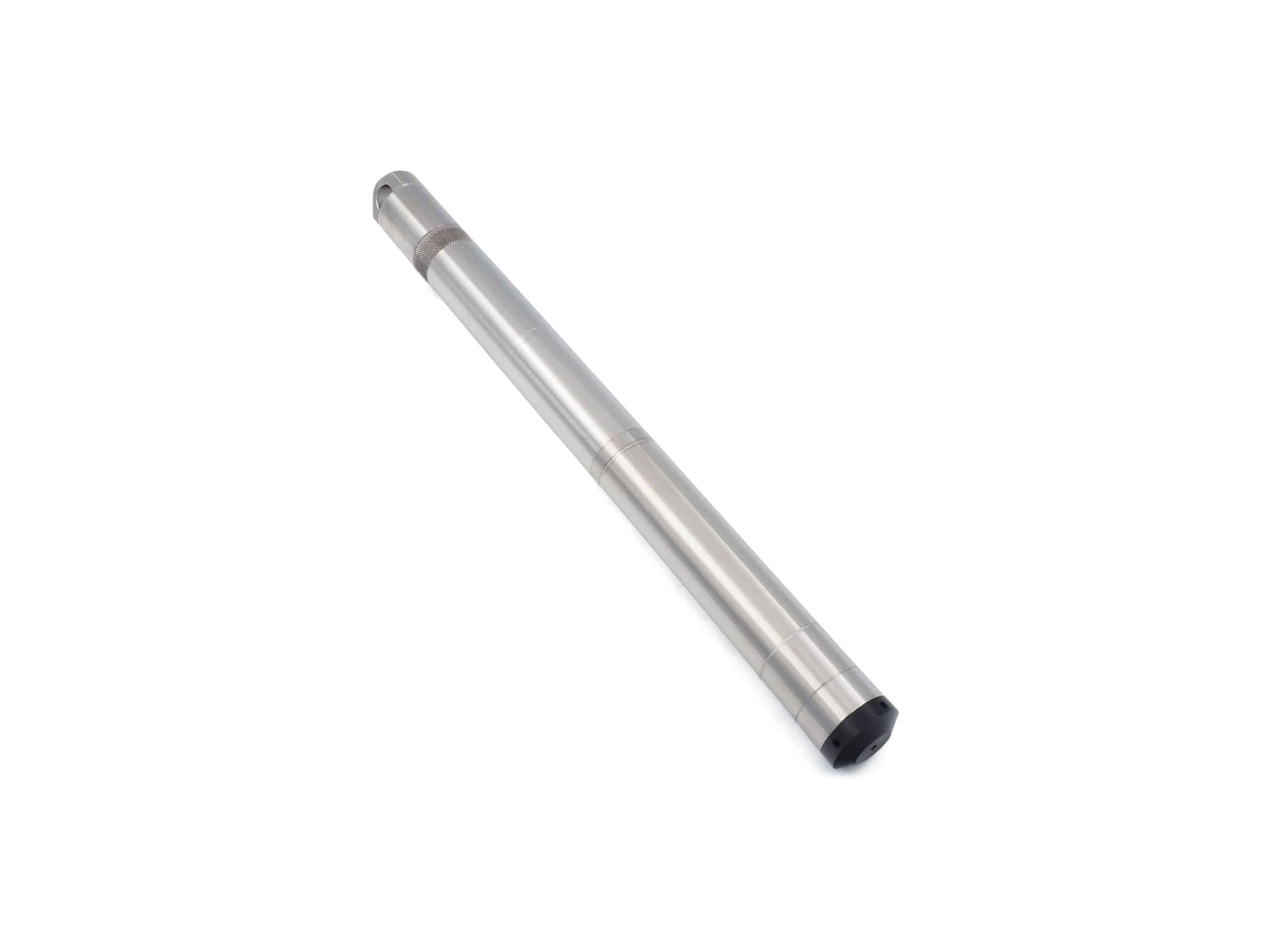
The technicians fitted a submersible pressure-based level data logger in each overflow chamber. The level sensor sits as low in the chamber as possible, and the battery compartment is mounted just below the manhole cover. In dry weather, the data logger records a level measurement once an hour.
The engineers set three trigger levels in the logging software to control how often the data logger records and when the flow calculation starts.
- Trigger on. Once the level reaches this value, the data logger steps up to one reading a minute.
- Weir crest. When the level passes the top of the weir, the software starts the flow calculation and keeps recording until the water recedes.
- Trigger off. Below this value, the data logger returns to hourly logging.
The data loggers are connected to a remote data transmission unit, allowing periodic transmission of the stored readings to the customer’s computer. Therefore, the customer need not travel to site to retrieve a measurement.
Products used
The data logger used in this case is the KELLER DCX-22, which is submersible and autonomously records water level, pressure and temperature. At one reading per hour, its battery runs for up to 10 years. This data logger is also available in sealed gauge, vented gauge and cable-free versions, with a measurement range of up to 11 bar absolute. The logging software includes a conversion module that calculates the overflow volume from the recorded water levels.
Outcomes
- A measured record of every overflow event on the customer’s own computer, in place of an estimate.
- Level readings every minute during an event and every hour in dry weather, on a battery that runs for up to 10 years.
- A total overflow volume for every event, calculated from the head over the weir, the flow rate and the event duration.
- An automatic report for every overflow location, listing the number of events and the volume discharged in each.
- The engineers can pinpoint which locations lack storage capacity and put the case for buffer storage where the network fails.
Australian water utilities face the same question after every major storm.
Browse all data loggers and data acquisition systems
Measure overflow at your weirs and pump stations
Send us three details. Our engineers will recommend a logging set-up and prepare a quote.
Number of sites
Overflow chambers to monitor
Chamber depth
Floor to manhole cover
Data retrieval
On-site download or remote
Call 03 9540 5100 or email enquiry@bestech.com.au
