What went wrong
Several restaurants opened in a commercial district in the United States, all draining to the same municipal lift station. After they opened, the station’s level measurement failed twice over. The submersible transmitter that gave the pump controller its level stopped transmitting a usable reading, and the mechanical float switches installed as its backup seized. With no level signal from either source, the pumps ran either constantly or not at all, and the technicians had to intervene quickly to keep the wider sewer system running.
Grease was the cause in both cases. Among the fats, proteins and carbohydrates in wastewater, grease is the one that clumps together and settles on any surface it reaches. On the transmitter, it settled on the membrane until the wastewater could no longer reach it, so the transmitter reported a level that had nothing to do with the wet well. On the float switches, it built up around the float balls until they could no longer move. A lift station starts and stops its pumps from the wet well level, and a false level is worse than none: it either runs the pumps dry and damages them, or leaves them off while the wet well overflows.
Why a non-fouling membrane
The end user replaced the fouled transmitters with a non-fouling submersible level transmitter with a membrane that grease does not stick to. Most non-fouling transmitters use a PTFE-coated elastomer membrane. That membrane resists grease but is soft and punctures easily, so it is fitted behind a protective shield mounted on bolts. Grease then collects in the gaps around the shield, and the fouling moves from the membrane to the shield.
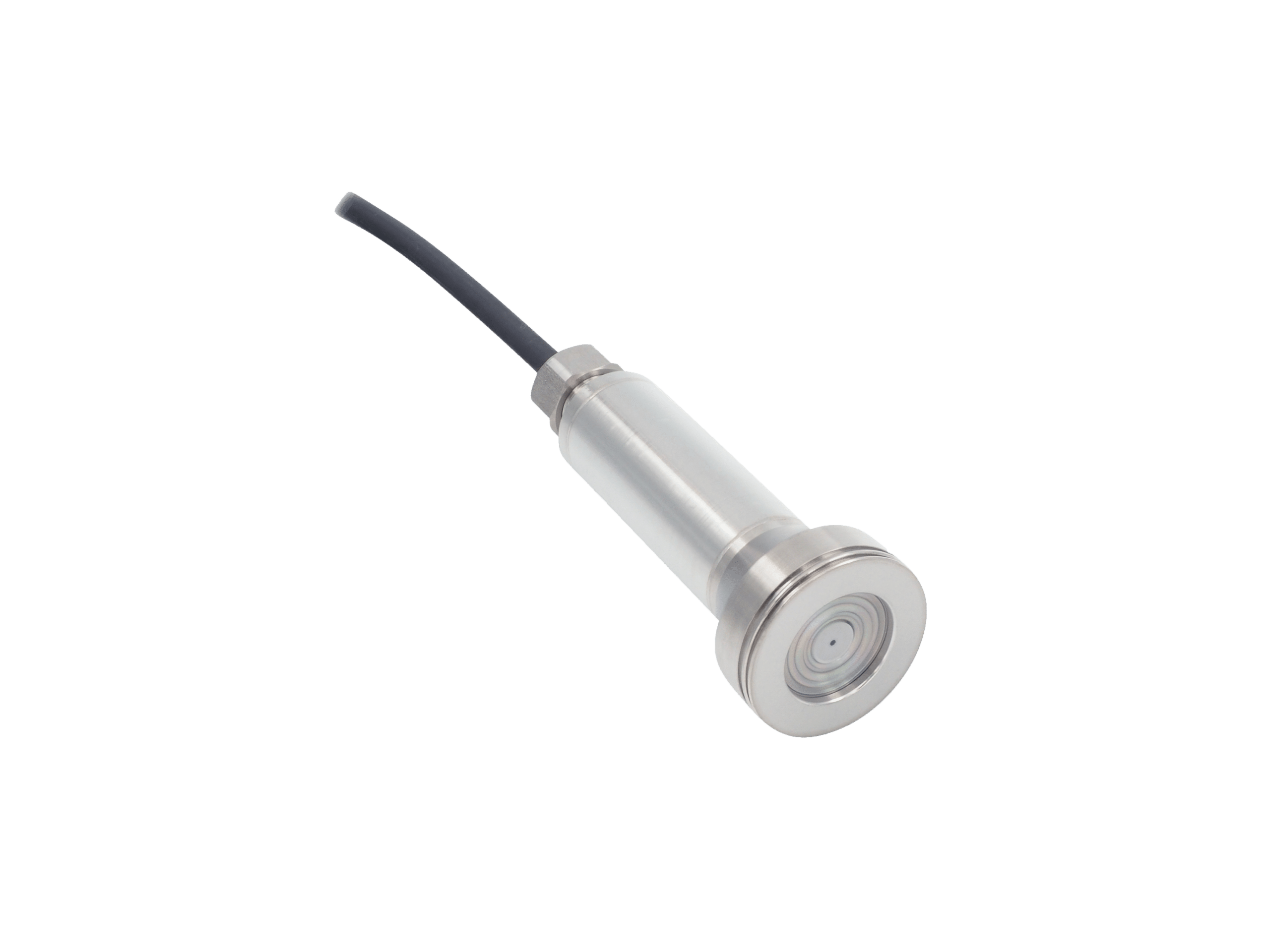
The transmitter the end user chose uses a harder membrane that resists abrasion and puncture on its own, so it needs no shield and presents no gaps for grease to collect in. The sensor face stays clean and the wastewater stays in contact with the membrane, so the level reaching the pump controller stays true.
The transmitter
The pressure transmitter used in this case is the KELLER 26KyX, a level transmitter developed for brackish water, sewage and wastewater. Its Kynar membrane combines the non-stick property of PTFE with the toughness and abrasion resistance that PTFE lacks, which is what allows it to work without a protective cage. The housing is AISI 316L stainless steel. The standard measuring range is 0.1 to 1 bar with an accuracy of 0.3% of full scale, and the output is 4 to 20 mA, 0 to 10 V or RS485, with the analogue output scalable to the depth of the wet well.
What changed
- The end user has recorded no incorrect level measurements from grease deposits since the new transmitters went into operation.
- The lift station runs its pumps from a true wet well level again, instead of running them constantly or not at all.
- No protective shield, so no gaps for grease, fibres and sludge to collect in.
Food precincts in Australian cities send the same grease down the same kind of drain.