
High-speed cameras are specialized imaging devices designed to capture events that occur too quickly for the human eye or conventional cameras to detect. Unlike standard video cameras that record at 30 to 60 frames per second (fps), high-speed cameras can record thousands, even tens of thousands, of frames per second. This capability makes them indispensable in fields where rapid, transient phenomena need to be observed and analysed in detail.
Events such as crack initiation, dislocation motion, and fracture propagation often unfold within microseconds or nanoseconds. Without high-speed imaging, these critical processes remain invisible or only partially captured, limiting our understanding of material performance.
Why High-Speed Imaging Matters in Material Science
High-speed imaging provides a direct window into the rapid and complex processes that govern material behaviour. It enables the visualization of:
- Crack initiation and propagation
- Stress redistribution
- Microstructural changes
- Strain localization
These observations are not just visual, they are quantifiable. With advanced image analysis software, researchers can extract meaningful data such as crack velocity, deformation patterns, and failure thresholds. This data is invaluable for validating simulation models in platforms like ANSYS, helping predict how materials will perform under real-world conditions.
Applications Across Material Testing
High-speed imaging is versatile and applicable across a wide range of material testing scenarios. Below are some key examples:
- Flexural and Impact Testing (5,000 fps)
At 5,000 frames per second, high-speed cameras can capture the subtle deformation and strain redistribution that precede material failure during flexural and impact tests. These recordings help validate theories of stress concentration and failure initiation, offering insights into how materials absorb and dissipate energy.
- Concrete Cracking and Failure Analysis (10,000 fps)
Concrete failure is rarely a single event. It involves rapid crack nucleation, branching, and propagation. Capturing these processes at 10,000 fps allows civil engineers to evaluate fracture toughness, understand load transfer mechanisms, and correlate failure patterns with microstructural features. This is especially useful in assessing the integrity of infrastructure under dynamic loads.
- Foam Dynamics Testing (10,000 fps)
Polymer and metallic foams are widely used in energy absorption, lightweight structures, and biomedical applications. However, their behaviour under stress is complex and nonlinear. High-speed imaging at 10,000 fps enables the study of bubble nucleation, coalescence, and collapse, critical for improving manufacturing quality and crashworthiness.
- Tensile Failure at High Strain Rates (30,000 fps)
In high-strain-rate testing, such as with a Split-Hopkinson pressure bar, materials can fail in microseconds. Ultra-high-speed imaging at 30,000 fps captures the exact moment of fracture initiation and allows researchers to correlate surface features with stress–strain histories. These insights are essential for refining constitutive models that describe material behaviour under extreme conditions.
From Visuals to Data-Driven Insight
The true power of high-speed imaging lies in its ability to convert visual data into actionable insights. By analysing thousands or even millions of frames, researchers can:
- Quantify mechanical properties
- Validate computational models
- Compare results with digital image correlation (DIC) techniques
- Develop predictive tools for material performance
This data-driven approach strengthens the scientific foundation of materials research and supports the development of safer, more efficient engineering solutions.
Impact Across Engineering Disciplines
High-speed imaging is not limited to academic research, it has practical applications across multiple industries:
- Civil Engineering: Assessing concrete durability and failure mechanisms
- Automotive & Aerospace: Evaluating crashworthiness and impact resistance
- Biomedical Engineering: Studying foam behaviour in prosthetics and implants
- Manufacturing: Improving quality control and material selection
By capturing transient events with high temporal and spatial resolution, high-speed imaging enables engineers to design materials and structures that perform reliably under stress.
High-speed imaging has revolutionized how we study materials under load. It provides a framework for evidence-based understanding of phenomena that were once invisible. Whether you’re analysing crack growth in concrete, foam collapse, or high-rate tensile failure, this technology offers unmatched clarity and precision.
As materials continue to evolve and applications become more demanding, high-speed imaging will remain a cornerstone of experimental mechanics, advancing both academic research and practical engineering.
At Bestech, we provide cutting-edge high-speed imaging solutions tailored for material testing and dynamic analysis. Whether you’re working in civil infrastructure, automotive safety, or advanced manufacturing, our imaging systems and expertise help you capture the data that matters with precision, reliability and speed.
Featured Products
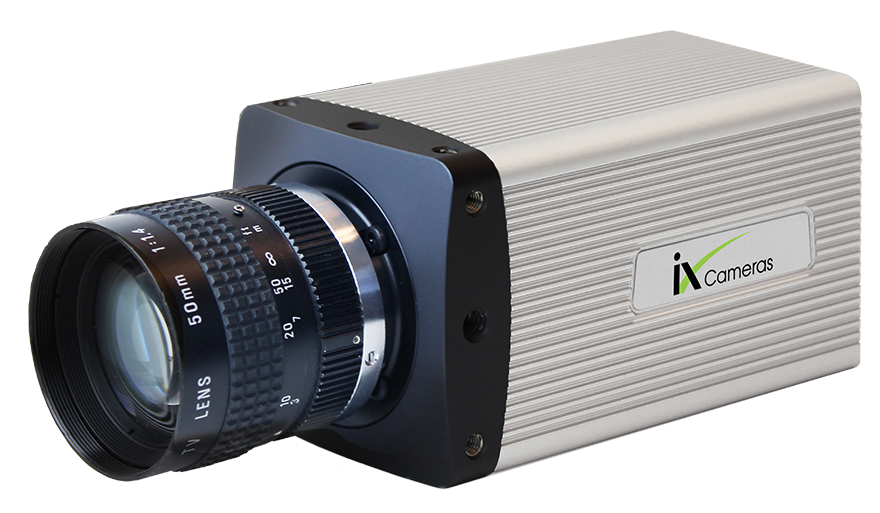
i-SPEED 2 Series: Small, Lightweight High-Speed Cameras
Compact and budget friendly, the i-SPEED 2 Series is designed for environments where space and cost constraints demand a compact high-speed imaging solution.
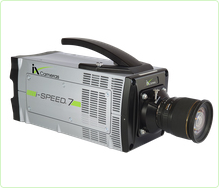
i-SPEED 7 Series: Elite Line of Scientific High-Speed Cameras for Research and Engineering
The i‑SPEED Series 7 is the elite high-speed camera system, engineered for the most demanding applications in scientific research, industrial diagnostics, and advanced engineering analysis.
Contact us today to explore how our high-speed cameras can elevate your testing capabilities and drive innovation in your field.
